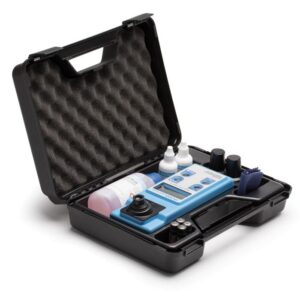
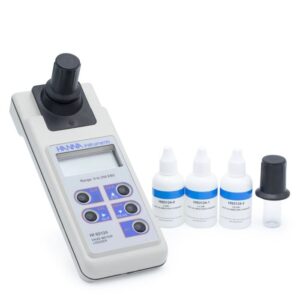
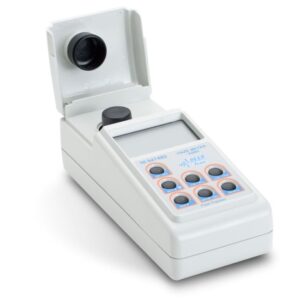
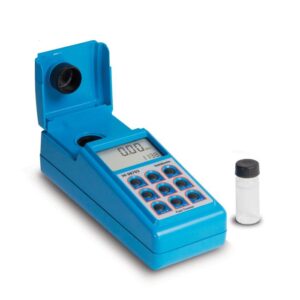
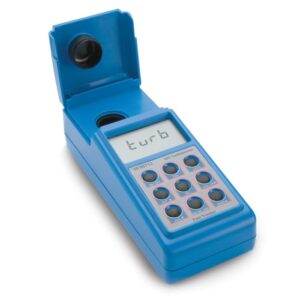
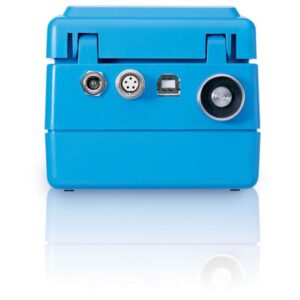
A portable turbidimeter lets you measure the cloudiness of water samples directly in the field, at treatment plants, or anywhere lab access is limited. Turbidity readings indicate how much suspended matter (such as sediment, algae, or organic particles) is present in a sample, making them a key indicator of water quality in drinking water systems, wastewater treatment, and food and beverage production.
Hanna Instruments manufactures portable turbidity meters that comply with internationally recognised testing standards. Depending on your application and regulatory requirements, you can choose between EPA-based or ISO-based models, or select a specialty meter designed for brewing and winemaking.
Two measurement standards govern how turbidity readings are taken and reported. The standard your industry or regulatory body requires will determine which meter you need.
EPA Method 180.1 – Required for drinking water compliance testing in the United States and widely accepted internationally. Uses a tungsten lamp light source and reports results in NTU (Nephelometric Turbidity Units).
ISO 7027 – The international standard used across Europe, Asia-Pacific, and most countries outside the US. Uses an infrared LED light source and reports results in FNU (Formazin Nephelometric Units). Because it uses infrared light, ISO 7027 is less affected by sample colour, making it the preferred choice for coloured or tinted water samples.
Not sure which standard applies to you? Contact our team at (65) 6296-7118 for guidance on local regulatory requirements in Singapore and the region.
Compare Our Portable Turbidity Meters
The table below gives a side-by-side overview of every portable turbidimeter in our range. Use it to narrow down the right model based on your compliance needs, measurement range, and budget.
Breweries and wineries needing multi-unit haze readings
$1,813
EPA-Compliant Portable Turbidimeters
If your testing must meet US Environmental Protection Agency (EPA) standards, choose from our EPA Method 180.1 compliant meters. These models use a tungsten lamp to measure scattered light at a 90-degree angle, reporting results in NTU.
The HI98703 is our dedicated EPA turbidity meter with accuracy of ±2% of reading plus 0.02 NTU. It features a Fast Tracker Tag Identification System (T.I.S.) for sample management, USB data transfer, and up to four-point calibration using AMCO-AEPA-1 primary standards.
For labs and water treatment plants that need to test both turbidity and chlorine residual, the HI93414 combines a nephelometer and photometer in one handheld device. It measures turbidity to EPA 180.1 and chlorine to EPA Method 330.5, reducing the number of instruments a field technician needs to carry.
ISO-Compliant Portable Turbidimeters
For users working under international standards, our ISO 7027 models measure turbidity using an infrared LED at 860 nm. Because the infrared light source is not absorbed by coloured compounds in the sample, these meters produce more reliable readings in natural water sources, wastewater, and coloured liquids.
The HI98713 is our full-featured ISO portable meter with Fast Tracker T.I.S., USB connectivity, and up to four-point calibration. The HI93703 offers the same ISO 7027 compliance at a lower price point with up to three-point calibration, making it a practical option for routine field testing.
Specialty Meters for Beer and Wine
Haze and clarity are quality indicators in brewing and winemaking. Standard turbidity meters report in NTU or FNU, but the brewing industry uses its own set of units: EBC (European Brewery Convention), ASBC (American Society of Brewing Chemists), FTU (Formazin Turbidity Units), and HELM.
The HI93124 is a dedicated EBC haze meter for quick, on-the-spot checks during production. For breweries and wineries that need to report in multiple units, the HI847492 displays results across four scales (FTU, EBC, ASBC, HELM) without manual conversions.
Common Features Across All Models
Every portable turbidimeter from Hanna Instruments is built with fieldwork in mind. Shared features across the range include:
AMCO-AEPA-1 calibration standards – All meters ship with primary turbidity standards for traceable, repeatable calibration.
Positive-locking cuvette system – Keeps the sample vial seated in the same position for every reading, reducing measurement variability.
Water-resistant housing – Designed for use in wet field environments where spills and splashes are common.
Battery or line voltage operation – Selected models run on batteries for field portability or AC power for extended lab sessions.
Need a turbidity meter that stays in the lab? See our benchtop turbidimeters for higher-throughput testing with continuous power and larger displays. You can also browse our full turbidimeter range to compare portable and benchtop options side by side.
How to Choose the Right Portable Turbidimeter
Selecting the right meter comes down to three questions:
Which standard does your industry or regulator require? If you are testing drinking water under US EPA guidelines (or local regulations that reference EPA 180.1), choose the HI98703 or HI93414. For international compliance under ISO 7027, go with the HI98713 or HI93703.
Do you need to measure additional parameters? If you regularly test chlorine alongside turbidity, the HI93414 saves time and cost by combining both measurements in one meter.
Are you in the brewing or wine industry? Standard turbidity units will not match industry-specific reporting requirements. The HI93124 or HI847492 report directly in brewing-standard units.
Still not sure which model fits your application? Call our Singapore team at (65) 6296-7118 or visit our contact page to request a consultation.