A pH meter is an electronic instrument that measures hydrogen ion activity in a solution, giving you a precise reading on a scale from 0 (strongly acidic) to 14 (strongly alkaline). Unlike pH test strips, which rely on colour matching, a digital pH meter provides accurate readings down to 0.01 resolution, making it the preferred tool for laboratories, aquariums, food production, and water treatment in Singapore.
Hanna Instruments has been building pH meters since 1978. In 1986, we introduced the pHep®, the first affordable pocket pH tester designed for non-lab users. Since then, we have continued to develop new sensor technology, including replaceable pH electrodes, Bluetooth-enabled probes, and application-specific testers built for difficult samples like cheese, meat, dough, wine, and beer.
Conductivity and TDS Testers come in a variety of styles. We have versions with graphite sensors which reduce polarization effects that occur with amperometric measuring methods. A key feature is temperature compensation, since EC/TDS measurements are very sensitive to temperature changes. Hanna Instruments uses an exposed temperature probe for near instantaneous measurement, resulting in a faster response time. Other features include a multi-level LCD to display EC or TDS along with temperature, adjustable EC to TDS conversion factors, and adjustable temperature compensation coefficient.
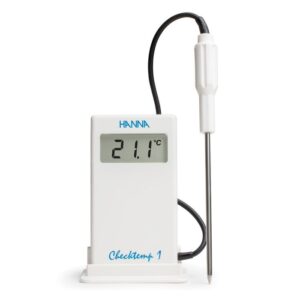
In 1995, Hanna Instruments introduced the first Checktemp® thermometers that incorporated a unique calibration check feature used to determine any drift of the internal electronics. A switch was used to place the thermometer in CAL Check mode. If the reading is inside +/- 0.3 °C from the 0.0 °C reference point then the internal electronics are working correctly. Today’s meters do the check at start up to know if the meter is working properly.
The range of testers available include stick style, folding probes, and weighted probes. We offer both thermistor and K-Type thermocouple technology based on the measurement range needed. Many meters have CAL Check, a certificate stating the accuracy that is traceable to a NIST standard, automatic shut off, and wake on motion. We also offer versions that are EN 13485 certified.
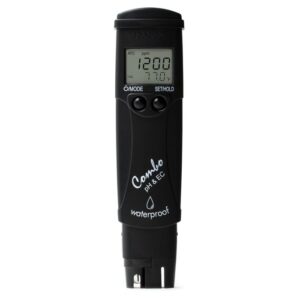
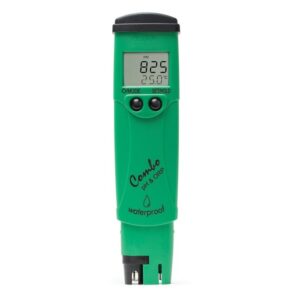
Many applications require a pH/EC, pH/TDS, or pH/ORP measurements. The pH/EC/TDS parameters are commonly measured in agriculture, including hydroponics and greenhouses, printing industry fountain solutions, and basic water quality including boiler and cooling tower treatments. The measurement of both pH and ORP is important in spas and swimming pools, food disinfection, and plating wastewater treatment. Our COMBO® meters feature a multi-level LCD that displays both temperature and the parameter of interest but also has indicators for instability, calibration, and battery level.
Salinity testers use a conductivity sensor for the measurement of artificial seawater used in saltwater and reef aquariums.
Our versions allow for results to be displayed as PSU, ppt, or specific gravity (S.G.).
The most important part of any pH measurement system is the design of the pH electrode. There are a variety of glass types and shapes for the sensing surface, and also a variety of junctions and body materials used in the construction. Application specific testers use the combination of electrode glass and shape that work best in the environment of a particular application. Whether it is tester for beer that has high temperature glass for mash measurement or to a removable sleeve that allows the cleaning and rebuilding of the junction for a meter made for the direct measurement of dough. Our application specific testers are the result of years of knowledge to build the best measurement system for your application.
The right pH meter depends on where you are measuring and what level of accuracy your work requires. Here is a simple way to narrow down your options:
Step 1: Identify your application. Are you testing aquarium water, food products, drinking water, laboratory samples, or industrial process fluids? Each application has different requirements for electrode design, sample temperature, and measurement resolution.
Step 2: Pick the right form factor. Pocket testers are best for quick field checks. Portable meters suit on-the-go professionals who need data logging and GLP compliance. Benchtop meters are built for lab environments where you need the highest accuracy and repeatability.
Step 3: Check electrode compatibility. The pH electrode is the most important part of any measurement system. Match the glass type, tip shape, and junction design to your sample. For example, a conical tip works best for semi-solid foods, while a spherical tip is the standard choice for general-purpose liquid measurement.
Meter Type | pH Range | Resolution | Best For | Price Range (SGD) |
Pocket Testers (pHep, Checker) | 0.00 to 14.00 | 0.01 to 0.1 | Quick field checks, aquariums, pools, hydroponics | $86 – $250 |
Portable Meters | -2.00 to 16.00 | 0.01 to 0.001 | Food production, water treatment, environmental sampling | $250 – $900 |
Benchtop Meters | -2.000 to 20.000 | 0.001 | Research labs, quality control, regulatory testing | $400 – $3,500 |
Multiparameter Testers (COMBO) | 0.00 to 14.00 | 0.01 | Agriculture, hydroponics, pools, cooling towers | $300 – $450 |
Application-Specific Testers | 0.00 to 14.00 | 0.01 | Sushi, bread dough, meat, milk, chocolate, wine, beer, skin | $153 – $250 |
Hanna Instruments offers a wide selection of pH and ORP pocket testers. The range includes the latest pHep, with its replaceable electrode design, and the Checker®, which has been a trusted tool in schools and field work around the world for decades. The Piccolo® series features an amplified probe that makes it immune to electrical noise interference, a common problem in environments with pumps, motors, or nearby electronics.
Versions with multi-level LCDs display temperature alongside pH or ORP, and include on-screen indicators for reading stability, calibration status, and battery level. Models with replaceable electrodes let you swap the sensor when it wears out rather than replacing the entire unit, which keeps long-term costs low.
Maintaining stable pH is one of the most important aspects of aquarium keeping. Freshwater fish generally do well in a pH range of 6.5 to 7.5, while saltwater reef aquariums typically need a pH between 8.1 and 8.4. Even small shifts outside these ranges can stress fish, invertebrates, and corals, leading to disease or loss.
A pH meter gives you the precision that test strips and liquid test kits cannot match. For freshwater and planted tanks, a pocket pH tester like the pHep provides fast, reliable readings at an affordable price point. If you are running a saltwater or reef setup, consider pairing a pH tester with our Marine Line instruments for alkalinity, calcium, and phosphate monitoring.
Hobbyists who inject CO2 into planted aquariums should pay close attention to pH, since dissolved carbon dioxide directly lowers pH levels. A pH meter with 0.01 resolution lets you monitor the exact drop during injection and make sure levels stay safe for your livestock. Singapore’s tap water typically has a KH of 1 to 3 dKH, so your target pH for a CO2-injected tank may be lower than what many international guides recommend.
The electrode is the heart of any pH measurement system. Different glass types, tip shapes, and junction designs perform better in certain environments. Our application-specific testers combine the right electrode configuration with a purpose-built housing for each use case.
For example, the Bread and Dough pH Tester (HI981038) uses a removable sleeve junction that you can take apart and clean after measuring sticky or viscous samples. The Sushi pH Tester (HI981035) is designed to meet HACCP requirements for rice pH monitoring. The beer and wine testers use high-temperature glass that holds up during mash and fermentation measurements.
Other application-specific models include testers for milk, meat, chocolate, soil, and skin. Each one is the result of decades of electrode engineering, built to give you faster response times and more stable readings in your specific sample type.
Many applications call for more than just a pH reading. Agriculture and hydroponics professionals often need pH alongside electrical conductivity (EC) and total dissolved solids (TDS). Pool and spa operators need both pH and oxidation-reduction potential (ORP). Rather than carrying two separate instruments, our COMBO® meters measure multiple parameters with a single device.
The COMBO testers feature a multi-level LCD that shows temperature and the parameter being measured at the same time. On-screen indicators for reading stability, last calibration, and battery level help you stay on top of maintenance. Models are available in low-range and high-range EC/TDS versions to match your specific conductivity requirements.
Regular calibration is the single most effective way to keep your pH meter accurate. We recommend a two-point calibration using pH 4.01 and pH 7.01 buffer solutions before each measurement session, or at least once a week for daily-use instruments.
Over time, pH electrodes develop buildup from the samples they measure. Cleaning solutions formulated for specific contaminants (proteins, oils, mineral deposits) remove residue that causes slow readings and drift. When stored, the electrode tip should always be kept in storage solution, never in distilled or deionised water, as this damages the reference junction.
Most Hanna pH electrodes last 12 to 18 months with proper care. Signs that an electrode needs replacement include slow response times, readings that will not stabilise, and calibration offsets greater than 30 mV from the ideal 0 mV at pH 7.01.
Hanna pocket testers are accurate to ±0.05 pH, while portable and benchtop meters can achieve ±0.01 pH or better. Accuracy depends on proper calibration and electrode condition. Even a high-end meter will give poor results if the electrode is dirty or the buffer solutions are expired.
For best results, calibrate before each measurement session. If you are testing multiple times per day, a daily calibration at the start of the day is usually sufficient. Always re-calibrate if you suspect drift or if the meter has been stored for more than a week.
For freshwater aquariums, a pocket pH tester with 0.01 resolution is enough for routine checks. Saltwater reef keepers benefit from a meter that also reads temperature, since pH and temperature are closely linked in marine systems. Check our Marine Line for aquarium-specific instruments including Checker HC colorimeters for alkalinity and calcium.
You can use the same meter body, but you may need a different electrode. Food samples like meat, cheese, and dough require electrodes with conical tips and open junctions to handle semi-solids. Water samples work best with a standard spherical-tip electrode. Many Hanna testers feature replaceable electrodes, so you can swap between applications without buying a second meter.

You can order directly from Hanna Instruments Singapore through this website, or contact us at (65) 6296-7118 for technical advice and local support. We stock all meters, electrodes, buffer solutions, and cleaning solutions at our Singapore office.
To empower customers to achieve quality
by supplying intuitive, accurate, and reliable analytical instruments with exceptional customer service and value.
We take pride in every product we build. From an original idea, to a completed product ready for testing. We oversee every aspect of the manufacturing process. It is this level of attention to detail that sets us apart.